
Creating a sales proposal can be challenging for any business.
You may have many questions whirling around in your head: what makes it different from a quote or estimate? What should it include? What should it look like? How should it be sent?
If you’ve read the previous blogs in this series (sales strategy and sales pipeline management), then you’ve got a good structure. What you need now is to focus on the skills.
Obviously not the trade skills – we know you’ve got those – but the skill to communicate your company’s offering in a winning sales proposal.
In this blog, we introduce you to the world of sales proposals and explains what you need to do to start building show-stopping proposals yourself.

What is a Sales Proposal?
Think of proposals as a written pitch to your prospects.
They outline the service and/or product you’re offering in a clear and descriptive document that can be reviewed in the prospect’s own time.
Typically, proposals represent the last step in the back-and-forth sales process and should be the final offering you make to a prospect before you expect their decision.
Sales Proposals vs. Sales Quotes
Proposals are a more comprehensive alternative to a simple quote or estimate and also demonstrate reasons why a prospect should pick your business for the job.
Remember, yours is not the only quote or proposal that a prospect may receive for this work.
This is your opportunity to make your business shine and for you to sell your company as the best solution over the competitors.

By including more than just the quoted price and a brief description, well-designed proposals can:
- Effectively display your brand and professionalism
- Showcase your dedication to great customer service
- Convey the quality of your services
- Highlight your business’s reputation and success
- Encourage sales of related products/services
- Make a strong, lasting impression
Proposals set the benchmark for the prospect’s expectations of your work and their interactions with your business, so it’s vital that you put your best foot forward.
A slap-dash sales proposal or a quick quote may not send the best message to prospects about what they can expect from your services.
Building Beautiful Proposals with Sales Proposal Software
Now, with a clearer understanding of what a sales proposal is – and why proposals are different from quotes – the next logical question is ‘how do I build one?’.
Of course, like many modern challenges, the answer is with software. While you could opt for more generic tools for creating PDFs, documents, and presentations, you’ll soon find that a dedicated sales proposal software for tradespeople is more intuitive and will give you the best results.
Remember that the design is not the only important part of building a proposal.
How much time and effort it takes your salespeople to build one, from inputting customer data to generating pricing tables, has a huge impact on your overall ability to make sales efficiently.
If the process is too drawn out and manual, you may find yourself wasting time and reducing the number of sales you make.
With a sales proposal software designed specifically for trades businesses, you can expect to sync up parts and prices, create proposal templates for different work, and ensure that a profitable sales proposal is quick to both build and send.
Let’s take a deeper look at what exactly you should plan to include in your sales proposals.
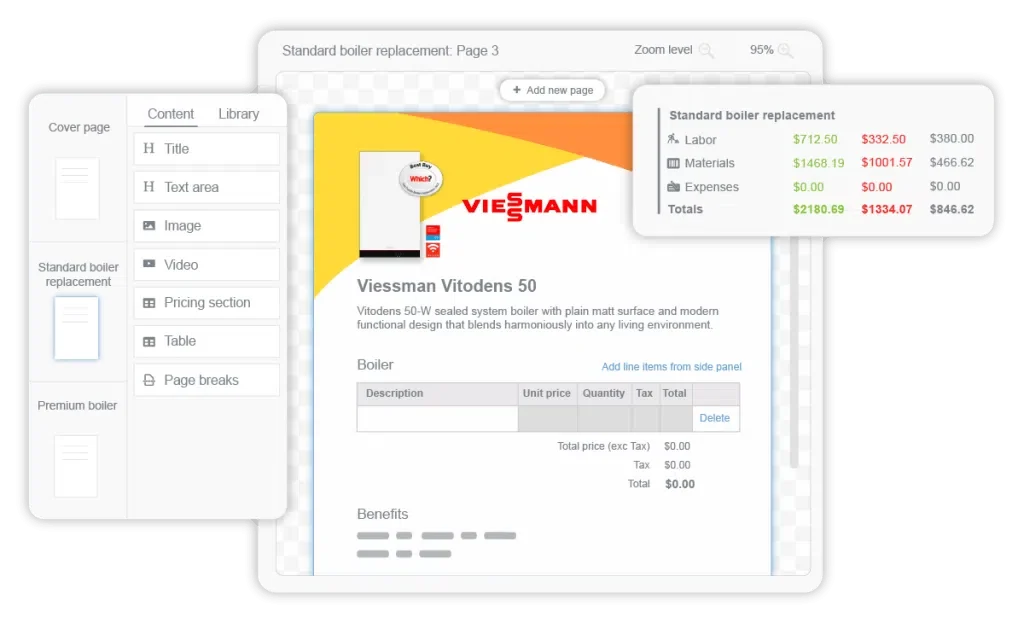
What Should a Sales Proposal Include?
Each section of your proposal functions to convince the prospect to choose you.
While proposals can vary across different trades, jobs, and workflows, we’ve included a fairly standard proposal template below.
A winning proposal needs to include a:
- Cover page
- Company overview
- Job specifications and options
- Add-ons
- Next steps
1. Cover Page
The cover is where your company branding shines.
Take the opportunity to use your logo and branding, make your company name overtly clear, and perhaps some relevant images and photography too.
Take a look at these examples of sales proposal template covers below:
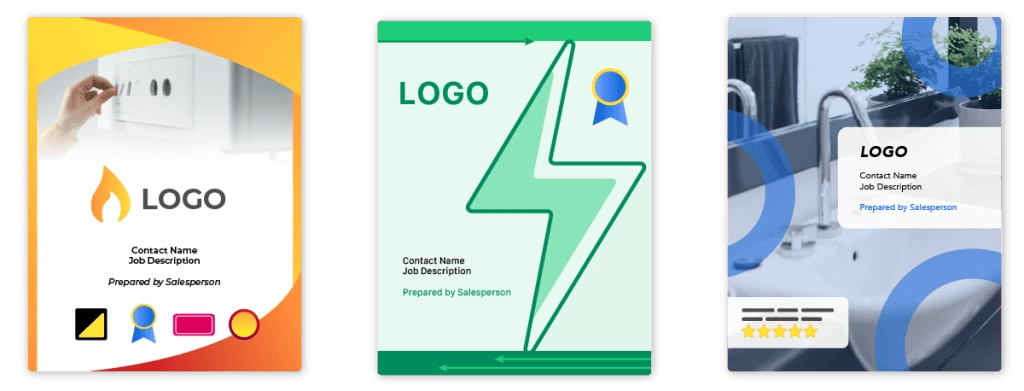
While your prospect is already familiar with your company at this stage, remaining recognizable and having a strong visual impact is still important.
After all, prospects may be reviewing proposals from multiple trades businesses, so it’s key that your company continues to stand out with a professional cover page that screams your branding.
If somebody looks at the cover for 5 seconds and can’t tell you the company name, you’ve got a problem.
By including the prospect’s name and the title of the job or type of work, the proposal is personalized to them and shows that this is not just a generic, churned out document that you send to everyone.
Make Sure Your Cover Pages Includes:
- Company name
- Logo and branding
- Website address and phone number
- Prospect’s name and the proposed job type
Tips for a Great Cover Page
- Make sure that your branding, design, and logo look professional (we’d recommend using a design company if your branding needs a refresh)!
- Match the design to your website for a cohesive experience
- Keep it simple and digestible; don’t overdo it with too many images, different fonts, or contrasting colors. You want your cover page to say “business”, not “busy”.
Curious to learn more about design?
Listen to our Podcast: Discover How Great Design Boosts Sales!
2. Company Overview
You don’t have to rush to the job-specific details on the first page of your sales proposal. This is your chance to share a bit more about your business and to try and differentiate yourself from competitors first.
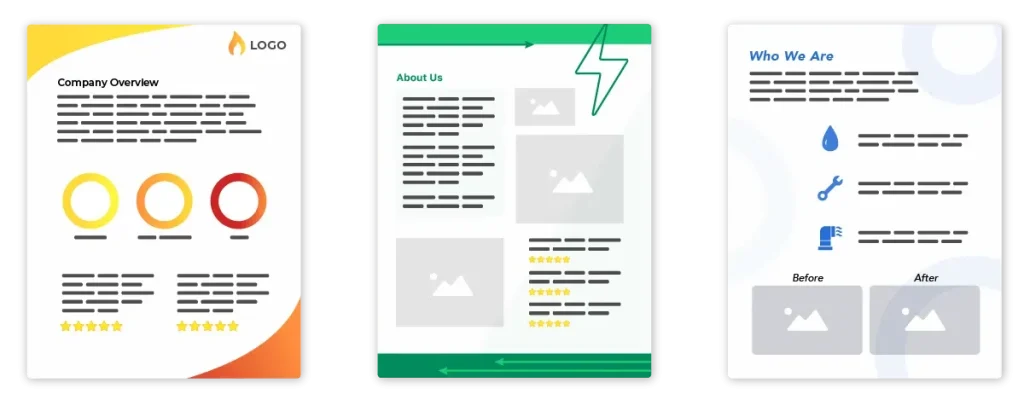
Exactly what you include will depend on your brand’s personality, company size, and your intended audience. There’s no right, or wrong method, per se; it’s about what works best for your trades business.
Try thinking about your future customers; what can you share with them that will win their trust?
Maybe they’d appreciate client testimonials and reviews or perhaps before-and-after photos of completed jobs. Building trust and establishing expertise through insights into your business makes it easier for prospects to commit to working with you.
Your Company Overview Could Include:
- A brief company history
- Something that sets you apart from competitors (your USP, if you have one)
- Your areas of expertise
- Social proof, such as testimonials from relevant clients and jobs
- Before-and-after photos of your work (bonus if they match the proposed work)
- Your team’s qualifications and accreditations
Tips for Promoting Your Company
- Is your company family-run? This can be a big selling point for new customers
- How long have you been in business? Longevity and experience are big sellers. If you’re a newer business, you might want to skip including that
- How much experience does your team have? Try adding up each technician’s years of experience e.g. “with 80 years of experience between us…”
- Do you have any well-known clients you could highlight? e.g. worked for a local star athlete or a chain of successful restaurants? Could they write you a testimonial or review?
- Can you include how many services or installations you’ve completed? e.g. “with over 1,000 HVAC units installed…”

3. Job Specifications and Options
Once you’ve highlighted your company, it’s time to focus on your future customer’s needs and how exactly you plan to help them. This is where you show that your team truly listened during the site survey.
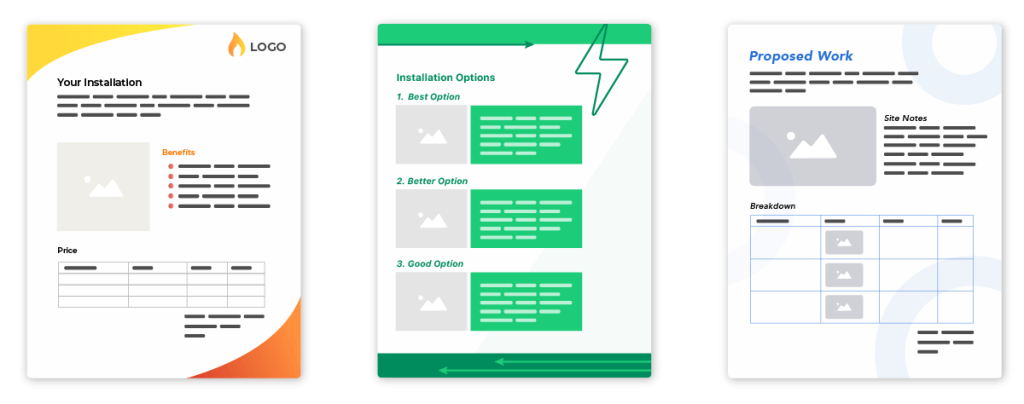
Demonstrate your knowledge by adding job notes or specifications centered around what the prospect asked for and what the surveyor assessed. Yes, this can take more time when preparing a sales proposal, but keep this in mind: personalization and attention to detail wins deals.
Don’t forget, this isn’t just a factual list of things you are offering. You still need to sell your proposed job and any options that prospects can pick from. Why would they want that appliance or that service?
Job Specifications Should:
- Reiterate what the prospect originally wished to achieve
- Outline what the proposed work entails
- Specify any appliances to be installed
- Have multiple options for the prospect to choose from
- Include price breakdown of parts, labor, and taxes
- Bonus: Offer the prospect a service contract for their new appliance
Why You Should Offer Multiple Options
It’s all a matter of math and psychology.
Simple mathematics tells us that when you provide multiple options, you increase your chances of presenting a winning solution to your prospect. If you’re not totally sure what they’ll go for, three options are better than putting all your eggs in one basket.
While it’s best to give the prospect a variety of recommendations, try not to overwhelm them. We recommend three options at a maximum.

By tiering three successively more expensive options as good ($), better ($$), best ($$$), you can better target a variety of budgets.
This gives you an opportunity to upsell the prospect to something a little more expensive than they may have initially chosen.
Don’t worry about putting people off. If your prospect is heavily driven by price, they will still have the cheapest option available to them.
Research shows that many people when faced with a range of prices don’t like to simply pick the cheapest. This is where psychology comes in.
‘Center stage’ pricing is a pricing strategy based on the idea that buyers prefer to pick the middle option, according to Oracle NetSuite.
Meanwhile, they note that the ‘price anchoring’ theory describes the situation where, when presented with the most expensive option first, buyers will consider subsequent options to be better value for money.
Combine the two and you may be able to consistently close higher value jobs than if you were only offering the prospect one option.
Tips to Improve Your Job Specification and Options
- Anticipate and answer any common questions
- Include site photos from the survey to further personalize the proposal
- List product details for each appliance from the product brochure or website
- Include images, technical performance information, energy ratings, warranties etc. as they can be very persuasive
- Embed a short personalized video outlining your recommendations – or perhaps a product overview video from the appliance manufacturer
4. Add-Ons
You’ve laid out the different options and what they involve in your sales proposal, but that doesn’t mean it’s time to stop selling. Add-ons are optional extras that prospects can choose to include or leave out of the deal and can be a fantastic source of additional revenue for your business.
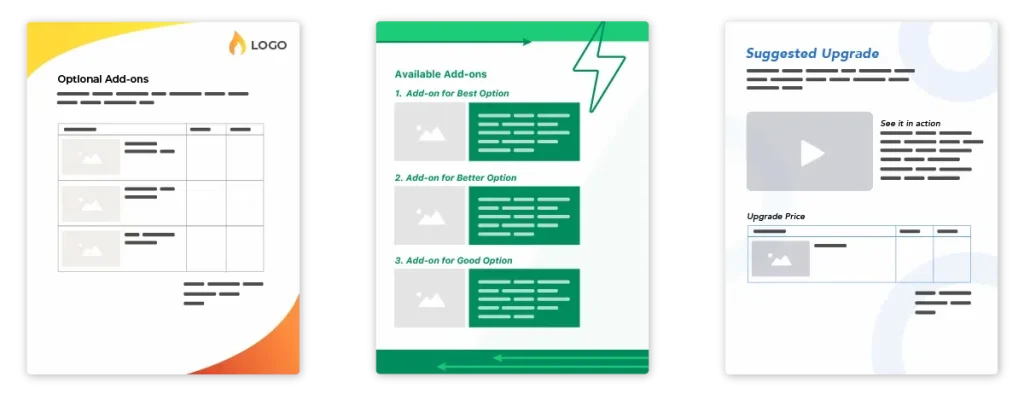
Just like offering multiple options, add-ons are simply basic math and psychology as well.
On the finance side, sales budgeting software can help your team incorporate add-ons that allow you to increase the ticket value of each option you offer, without increasing the lowest price presented.
This means that budget-focused customers can simply leave the add-on out and still get the same great price, while those looking for a premium offering have ways to get more (and spend more).
Option 1: $500 – Add-on adds $150
Option 2: $650 – Add-on: +$150
Option 3: $800 – Add-on: +$150
There’s psychology to the idea of add-ons too.
When you think of ‘impulse buying’ you may be reminded of getting in line at the grocery store and impulsively adding a Snickers bar to your basket, but the basic principle applies to any buying scenario.
Many buyers will want or at least be open to additional services and products (especially when you are communicating clearly why they need them), but they may not have explicitly asked for these from the start.
For example, when selling a new boiler, you could offer a power flush or smart thermostat as an optional add-on. Any buyers that were on the fence might not be able to resist once it’s in front of them – helping you increase your bottom line.
Tips for Better Add-Ons
- Make them relevant and a logical addition to the options on offer. You may need to offer different add-ons for different options if they are drastically different products/services.
- Consider a small discount to encourage impulse buying and help prospects feel like they are getting a deal if they act now.
- Sell them well. Include descriptors, benefits, and images to make add-ons as attractive as possible.
5. Next Steps
You’ve provided an enticing and branded cover page, outlined your services, explained how your team can best help the prospective customer, and detailed different options and add-ons; now it’s time to wrap up with clear and actionable next steps.
At this point, it’s important to understand that prospects may be at different steps in their decision-making.
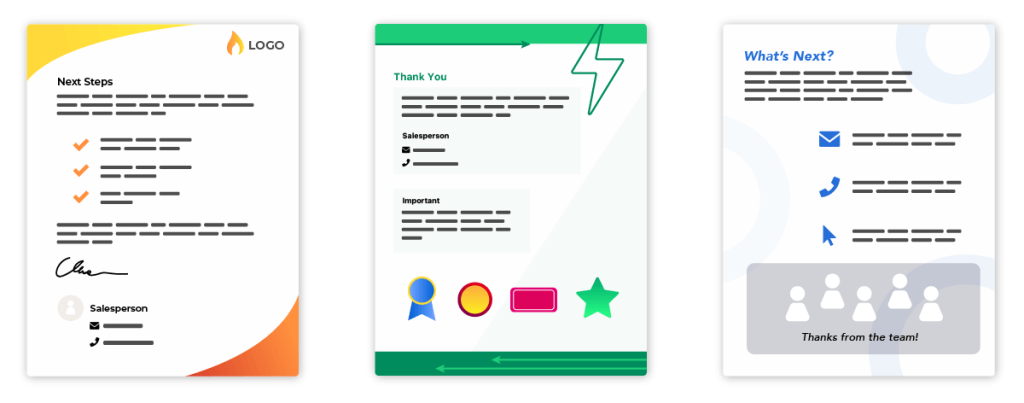
Some will still be evaluating competitors and may have additional questions, while others may be ready to move ahead right away. Make sure that you provide information that will be useful no matter where your prospect is in their own decision-making process. Your goal is to provide actionable next steps and make yourself approachable for any follow-ups, all while setting a sense of urgency to encourage the prospect to make a decision.
Unknowns can be scary. Get this final page right and your prospects should have no doubt as to what comes next if they choose to work with your business.
What to Include in Your Next Steps:
- The salesperson’s phone number and email address, with a prompt to get in touch if they have any questions
- Clear instructions on how to accept the proposal (such as by phone, email, or via an online portal)
- An expiry date or time frame for accepting e.g. “this proposal is valid for 30 days.”
- An idea of the current waiting time for such work, if possible. This gives the prospect clear expectations
- An outline of what to expect once they accept e.g. “as soon as your proposal is accepted and the deposit paid, we’ll order the necessary parts and reach out to arrange the exact day that the work will be completed.”
Use an Online Proposal Portal
To give customers the best possible experience, you want to provide an intuitive and convenient way for them to review and accept your proposal. This not only makes it crystal clear for customers as to what they are accepting (and the options or add-ons they have chosen), but it reduces friction in the process too.
A self-service proposal portal means that at any time of day or night, customers can action your sales proposal, make their various choices, pay a deposit, and even apply for financing too.
And all without calling or emailing your busy team.
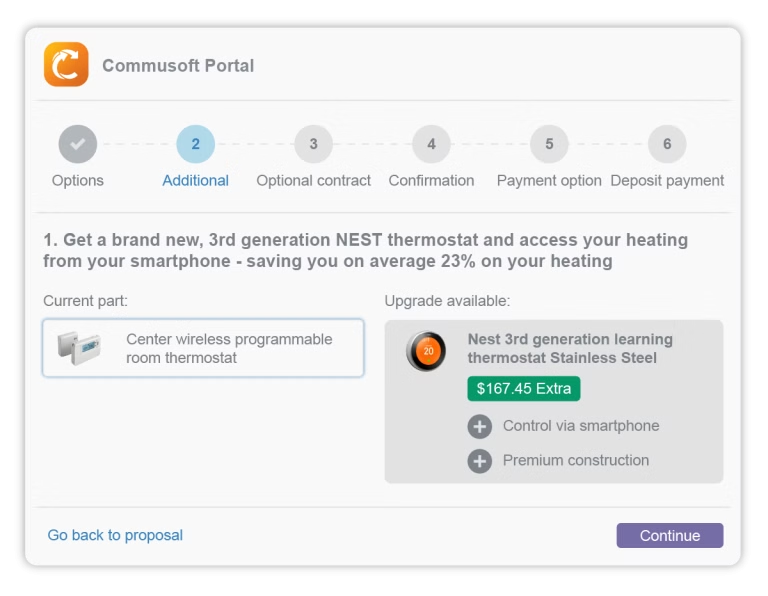
Of course, some customers will prefer to call in and run through their proposal with you before accepting.
But for many, a more convenient option that’s available 24/7 will be just what they are looking for – and is sure to impress!
And there you have it: a winning sales proposal from start to finish!
How Important is the Appearance of the Proposals you Send?
Very important: The quality of the documents you send says a lot about your business, and the reality is many people will judge a book by its cover.
That’s why your proposals need to stand out from the crowd and work to win over your potential customers. Looking for a design company to help make your documents shine?
Not very important: Most likely you consider your documents as transactional, and their purpose is to communicate a price and that’s it.
However, the documents you share will absolutely impact the perception your prospects have and their decision to do (or not do) business with you.
After all, people will judge books by their cover.
Offering Finance to Help you Win Proposals
Financing has long been an option for customers making large purchases (and it’s increasingly popular for small purchases too)!
You make important purchases more affordable and can still collect payment for services you’ve provided.
Why You Should Offer Financing to Customers
Enabling your customers to pay via externally financed loans ultimately gives you the ability to sell to more people.
Some prospects will need your services, but simply can’t afford to pay for significant work all at once. Make sure you don’t turn these willing customers away.
Offering financing makes it easier to win bigger jobs!
There are many reasons that a customer may choose to pay via financing; we all know that big purchases can be daunting.
Appliance financing downsizes an enormous financial commitment into manageable segments and limits the risk of you not getting paid. And as a bonus, when payments are split into smaller portions, you may notice that customers are willing to spend more overall too.
Of course, many trades businesses are already offering financing to customers. Many also offer flexible payment options – and perhaps your business does too.
But answer this question: is financing appliances currently a burden in your sales process?
Financing should help you close more deals and sell to more people, but instead many businesses find that the paperwork and admin required to get appliances financing approved can sometimes kill the sale itself, especially if your workforce is stretched thin.
However, it doesn’t have to be that way…
Common Challenges Associated with Offering Financing in the Trades
- Legal and regulatory compliance: offering in-house financing is rare for smaller service businesses. After all, running credit checks and overseeing legal risks is time-consuming and delicate without the right support. That’s why most trades businesses who offer financing work with a financing partner.
- Interest rates and terms: working with a financial provider comes with service, late, and early repayment fees. It’s crucial to explore and understand what different partners offer, and how it impacts your customers. Additionally, fees associated with your financial partner will affect the acquisition cost for new customers.
- Customer education: your team needs to clarify what kind of financing options you offer, and how it will affect their payment journey. Financing can add hurdles and time for the sale, giving more chances for the prospect to drop off.
- Administrative burden: An application needs to be created and completed, taking time for both you and the prospect (no one likes to do paperwork in the evening or on the weekend!) Further, you can hit delays and chase paperwork back and forth with either the prospect or financing provider.
How to Reduce the Friction of Financing
Done correctly, contractor customer financing should be a boon to your sales strategy.
The question is, how can you implement frictionless appliance financing?
By making the application process simple and the ability to receive a decision within a couple of minutes, you can turn financing appliances into a streamlined option that drives sales.
Easy, right?
These may all seem like things that are out of your control, but the good news is there is sales software that will do this for you.
By offering finance options through a self-service portal, prospects can fill in an application form instantly and receive a decision within minutes.
No paperwork needs to pass through your hands, the customer is happy as they’ve split their bill, and you made a sale you otherwise could have lost.
It’s a win-win situation.
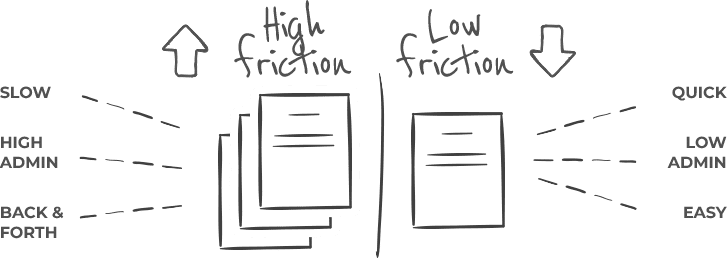
Simplify and Digitize the Financing Application
Much like your sales process, digital options streamline the application and approval journey.
In comparison, paper-based applications can cost your business in time and printing fees.
Further, this solution ensures documents don’t get lost, makes it easier to collect signatures, and facilitates passing information onto financial providers.
No one wants a lengthy sales process!
Offer Quick Credit Decisions
Depending on your in-house team, or financial partner, your team can stand apart from competitors by incorporating soft credit checks into your regular sales process. Your sellers can obtain verbal or written consent to pull your prospective customer’s credit.
Note: confirmations over the phone must be recorded.
Seamlessly incorporating financing and credit checks into your sales conversations ensures prospects can get approved sooner.
Provide Incentives
Prospective customers want to feel cared for and catered to. You may be able to provide reduced service fees and interest rates based on your financing partner, and financial system.
Offering incentives ensures more customers can get the exact services they want, without having to compromise.
Do you wish you could offer financing to customers more regularly?
Your biggest challenge to offering more financing is the admin burden and the back-and-forth of completing an application.
Eliminate those and there’s no reason that your customers can’t finance jobs more regularly and with less friction!
While financing is a great way to attract and win customers, it doesn’t make sense for all types of trades business. But explore your options if you think it’s right for you and your customers.
Communicate All Financing Terms Transparently
Not everyone is an expert in finances. It’s crucial to break down your offerings into the simplest terms.
Further, these conversations are great opportunities to educate customers about all the benefits of financing. Your prospects will remember and appreciate your team’s excellent customer service.
With offering financing to customers covered, you can find out more about measuring success through sales reporting in our next blog: Measuring Success with Sales KPIs and Reporting.







 English (United States)
  English (UK)